30 Comments

There's plenty of stabilizers on the market in all different shapes and sizes, but finding one to support up to 8lbs. of weight narrows the playing field. Now when you're talking about finding a portable lightweight stabilizer + carry 8lbs. the list gets even smaller. The Steadicam Merlin is one of the best performing portable stabilizers i've used, but has specs to support only up to 5lbs for about $800 dollars, the Glidecam 2000 up to 6lbs, and The Glidecam 4000 can support up to 10lbs for about $550.

The Blackbird stabilizer from Camera Motion Research is said to support up to 8lbs, is cheaper in price, and less than half the weight and size (making great for traveling) compared to the Glidecam HD4000. The Gimbal handle design with universal joint is found on other stabilizers, but this is the largest one i've seen. How well does it perform? Well, there's videos of this stabilizer flying a Sony EX1 so any DSLR should be a breeze. Just by looking at the build quality, there's quite a bit of thought placed into every detail about how this thing works. The stage has a quick release system, can be adjusted forward / back, and left / right with fine tuning knobs. The weights on the bottom are mounted to an adjustable post with clear markings for easy repositioning if you have to take the unit apart. (I often use nail polish on my Glidecam posts to make sure I can line things back up) One interesting feature addresses problems with what most people have issues with (stabilizer roll). By adjusting friction into the Gimbal it keeps the stabilizer horizon more consistent.

Here's a great little review from Vimeo member Firewerkz Films

If you understand stabilizers, how they work, this one is clearly made to address all concerns for getting the camera quickly balanced, easy to fly, and travel light. I'll be putting it together and testing it out later this week, but so far it looks like a great little product. I'll have part #2 of this review up soon.

blackbird-stabilizer
find-price-button Camera Motion Research BlackBird Stabilizer

3 Comments

zeiss-cp-EF-PL-lenses

When Borrowlenses.com first started out, there wasn't much available for Videographers (mainly photographers). It seems the line of rental equipment that can be had is expanding and includes some very cool stuff. A small 7 piece set of Zeiss Compact Prime lenses can go for upwards of $24K, or around $5K each. Not something most people want to invest in, but at least now it can be rented. Remember that you don't need to be in the area to pick the rental up, they'll box it up and ship it right out to you. You should check prices of Rental gear to see if you can squeeze add it into the client's budget. That could save you some cash for items you don't use very often.

phillip-bloom-pocket-dolly

Also adding in to the lineup of things is a DSLR slider. One rental piece available is the consistently sold out Signature Philip Bloom Pocket Dolly - by Kessler. Boy would I love to see some Cinevate Linear tracking systems on that list too. There's also Glidecam Stabilizers, and LED Video Lights, but extremely short on the DSLR Shoulder rig lineup (sucks). Much more available at the site and the list seems to be growing every week. All found following the link.

borrowlenses
visit-button BorrowLenses Website Camera Equipment Rental
21 Comments

Letus-Hawk-T3i (3 of 10)
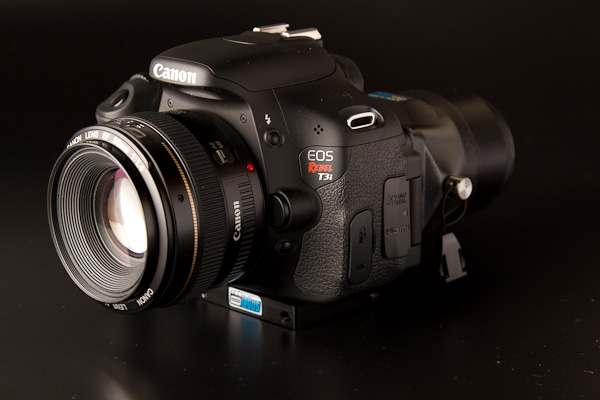
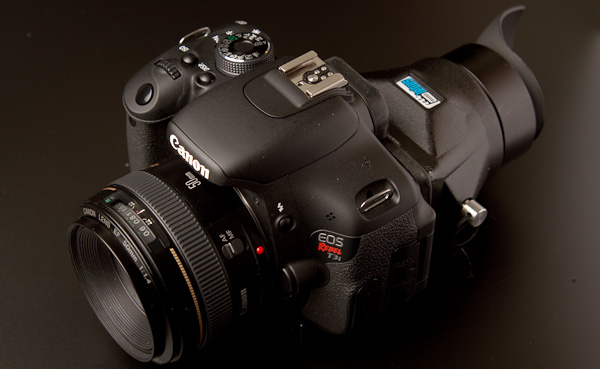
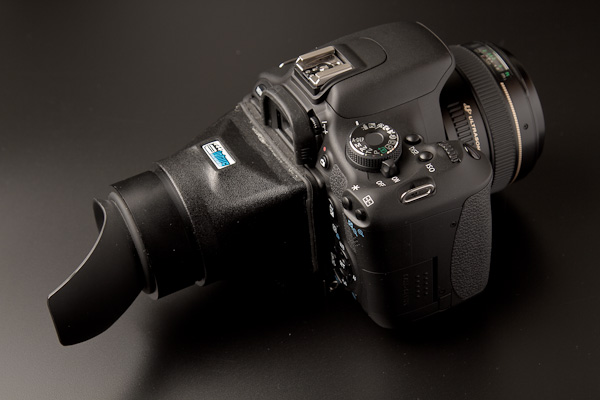
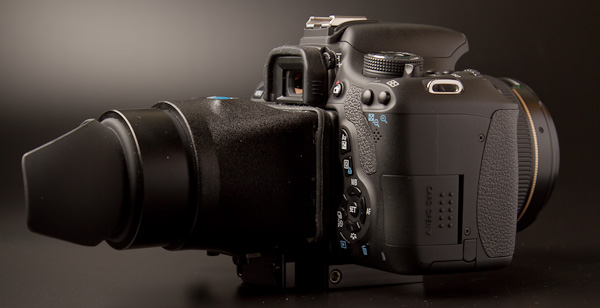
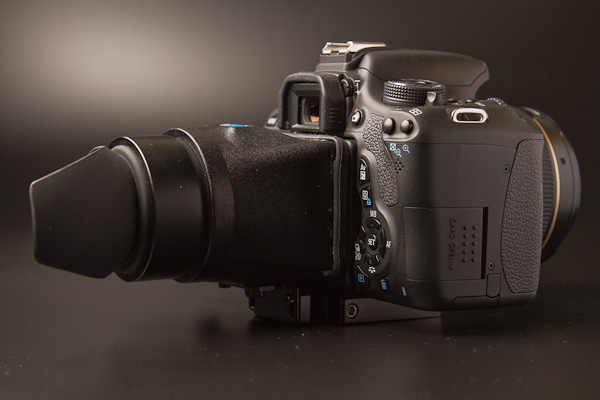
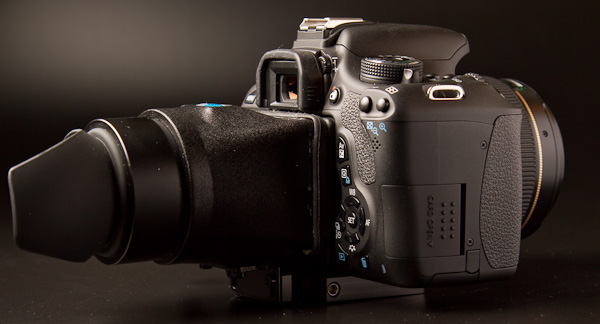
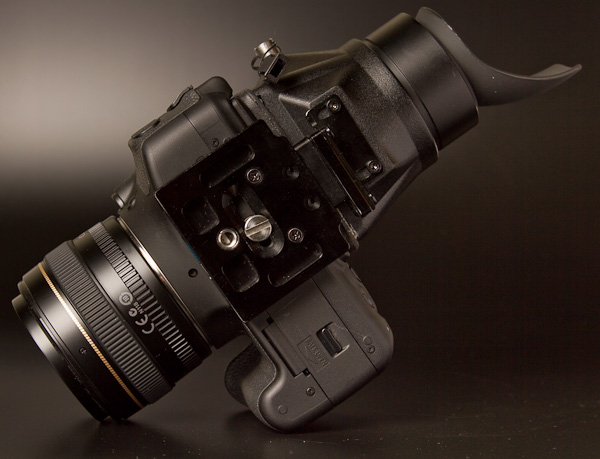
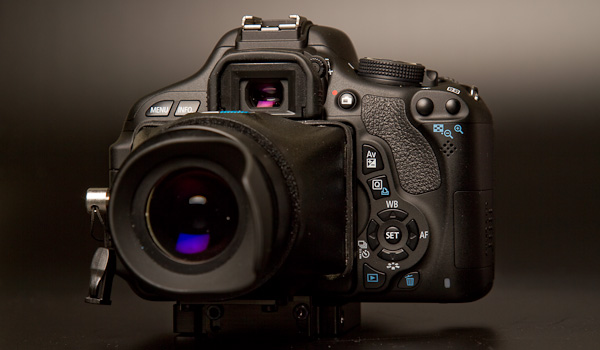
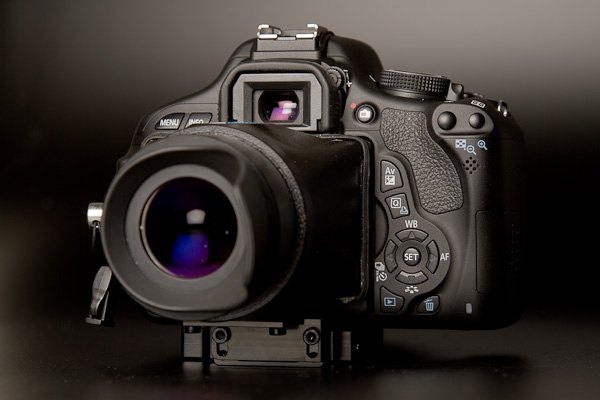
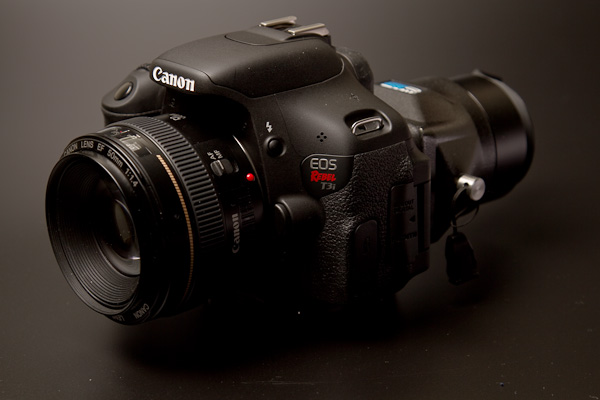
Canon T3i / 600D shown with Letus Hawk VF LCD View Finder

Letus created a Hawk VF (View Finder) for the 3:2 aspect DSLR LCD's like the T2i. It so happened to fit on the Canon 60D and fits pretty nicely on the Canon T3i as well. There's a base plate that is mounted to the bottom of the camera (still supports a tripod mount), and the Hawk VF View Finder is attached through a quick release system. It's a great semi-permanent way to attach a View Finder to the T3i without the use of sticky frames. For a closer look at how that all comes together, check out the video below.

3 Comments

Screen shot 2011-03-07 at 7.07.35 PM

When used properly DSLR's can provide amazing quality video footage. Of course you've probably already heard of all the problems that go with shooting video DSLR cameras too. If you're just starting out with DSLR's or might be wondering about implementing DSLR's into your workflow, you should definitely check out B&H's HDSLR Hub taught by Shane Hurlbut, ASC. So far it's based around the amazing Canon 5D Mark II, but many of the tips, tricks, and advice are general to all DSLR's. Episode II was just released today, and there's a schedule to release more in the coming weeks. All found here: https://www.hdslrhub.bhphoto.com

21 Comments

YouTube member mowaska has a new take on a DIY DSLR rig that transforms from a compact travel item into a full Shoulder Rig complete with Counterweight and handles. Completely tool-less, it uses a series of clamp knows to unfold, and even has a way to mount a Manfrotto quick release plate (without adapter). Pretty cool, and some company out there needs to run with this idea..

8 Comments

What's the purpose of a Matte Box? The big flags help shade the lens from flares or any little bit of light adding better color and contrast, and also allows placement of certain filters such as ND, Gradients, and Polarizers. With filters you would be able to control shutter drag, aperture, color, and other details. Nothing beats the real thing, but if you can't afford it, there's some clever DIY tutorials out there. YouTube member EquippedforMedia puts together a DIY Matte Box starting with a tray for a weighing scale. Filter holder is the popular Cokin P series, which i've used myself in Hawaii.

The Cokin Filter system is a light weight cheap filter kit (mostly plastic), but great for traveling and keeping things light. With a good Gradient ND Filter you can bring down the bright sky while still maintaining proper exposure on the landscape. Keep in mind these filters are not just for video, but enhance your Photography too. One thing to keep in mind that as you stack filters in front of the lens, it's harder to manage with Wide Angle Lenses.

So instead of going the DIY route to control Lens flare, Cokin already has a square hood with filter holder to get you started with a Matte Box type look, and filter holder functionality. They are also stackable so that you can make the hood longer or shorter. What you'll need to make this happen is the Filter Ring (choose correct size), Filter Holder, Square Hood (or several), and P Series Filters. You could probably score all of this for under $30 bucks.

Screen shot 2011-03-07 at 8.47.30 AM
find-price-button Cokin P Series Filters, Filter Holders, Square Lens Hoods

YouTube member MrHotRod460 assembles a DIY DSL Shoulder rig. Things seem to be in all the right places to stay in control of all the accessories, keep it well balanced, and ergonomic. Not shown was probably the LCD monitor that goes towards the left hand. If you're not into LCD View finders, placing a lightweight LCD in front instead of the entire camera keeps most of the weight closer to the shoulder support. More comfortable for some people, but obviously more things to carry and manage. Great stuff though.

8 Comments

Varavon's new Armor adds a few extra handles as well as accessory mounting points. It's a cross between a cage and a hand held stabilizer. I think it looks pretty cool, but i'm not sure how you actually set the thing down. Either way, it keeps the camera looking fairly low profile while still adding functionality to shooting hand held, I think it's pretty cool.

Thinking about what I have laying around to simulate a DIY, it reminds me of a Photographer's Rotating Flash Bracket. Maybe throw a handle here and there, drill a few holes... Check this one out by Custom Brackets.
Screen shot 2011-03-06 at 10.00.42 PM
find-price-button CB Junior Rotating Flash Bracket Kit

Screen shot 2011-03-06 at 9.49.35 PM
find-price-button Variety of Rotating Flash Brackets via eBay

4 Comments

Vimeo member ek2008 really took his time making this DIY video camera stabilizer. Not only looks good, but works great as seen in the video above. Look through some of the older videos and you'll see it's been a work in progress for several months.

Vimeo member Tim Nitsch uses a simple servo, spool, and a bit of string to motorize an IGUS slider. More information on how it's all put together at the video link.